
My better half and I took the shinkansen from Tokyo to Kumamoto to attend a friend’s wedding over the weekend. We had a great time and before returning home we took the opportunity to visit Kumamoto Castle, one of Japan’s top three.
It is currently undergoing reconstruction until 2052 to repair all the damage done by the big earthquake in 2016.

Look at the nose on this thing
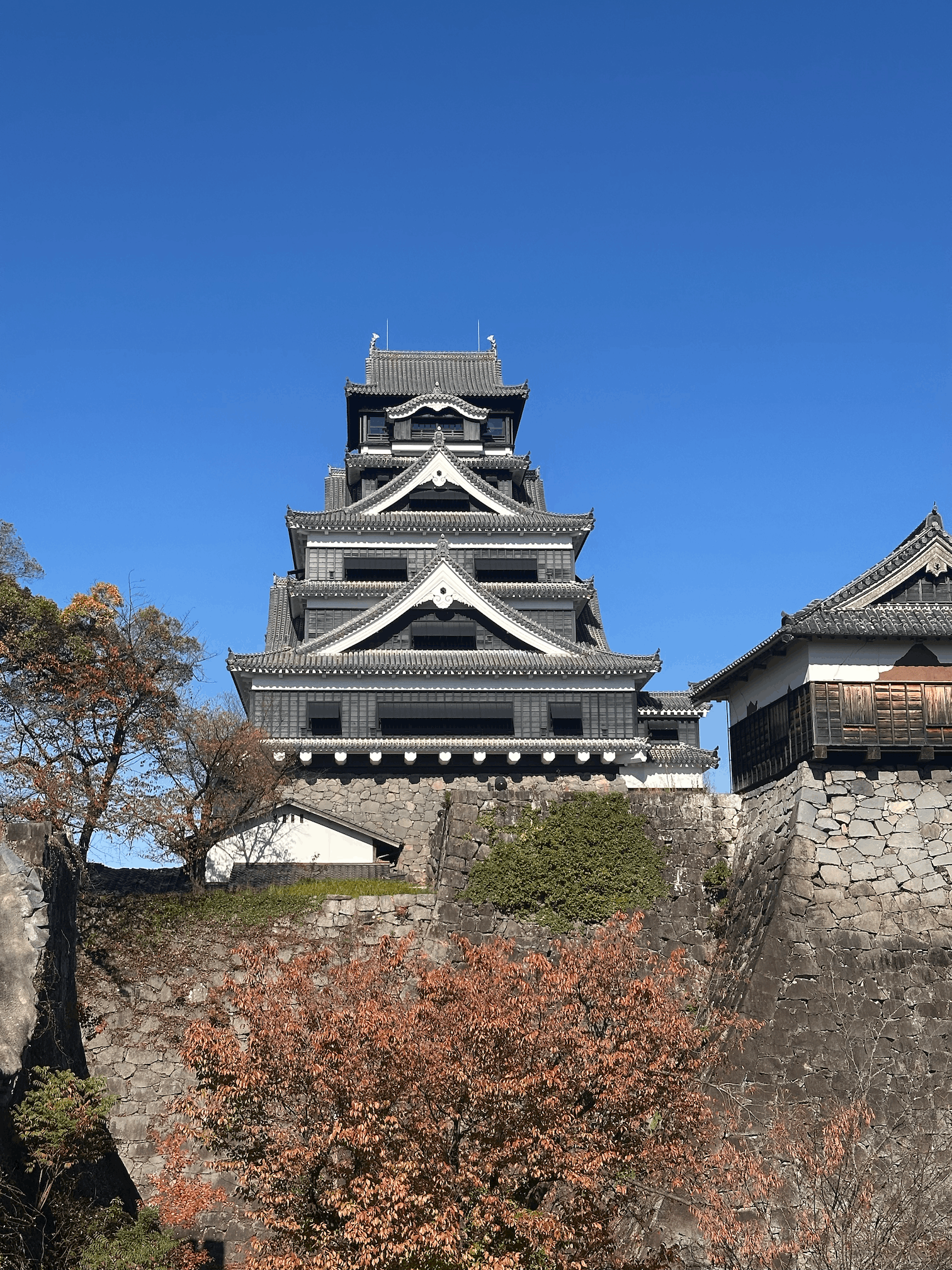
The ever impressive Kumamoto Castle
Disclaimer: This post contains some high-level spoilers of 20,000 Leagues under The Sea by Jules Verne.
I was watching the below Walter Isaacson interview of Palmer Luckey, the CEO of Anduril, and found some of it peculiar.
I wasn’t aware that he and I had similar interests in 20,000 Leagues under the Sea as well as in Star Trek (mentioned around the 4:33 mark), both of which I was practically raised on.
Java users on 64-bit x86 CPUs made by either Intel or AMD are recommended to upgrade as soon as possible. Users on ARM64 (Apple Silicon, Snapdragon, etc...) are not affected.
The details of the vulnerability can be found here.
If you are using the Oracle edition, the latest November Java 27 (27.0.1.1+4) version is ready as of 2026-11-17.
If you are using a different edition (Coretto, Zulu or other) please keep uprised of updates.
It was just a matter of time
SenteAI, a company I wasn't previously aware of, has released Open Executive, an open source AI replacement for potentially a company's entire C-Suite.
I don't know if this idea will pan out, and I'm not the biggest fan of AI, but the idea that workers can create, without any business skills, a startup and skip the hiring of an executive team from the get-go sounds like a good thing.
A brief story of how Momiji all started and a peek of where it is going.
Back in 2013, I was an avid developer for Apple platforms and created a bookmark manager for macOS, and iOS (both on iPhone and iPad) called Momiji. The pendulum kept swinging back and forth for me between relying on bookmarks and relying on web search to find the sites and pages I wanted to revisit, but I had finally decided to put my full weight behind bookmarks.
Despite the skeumorphic phase its author was going through, Momiji had its modicum of success. But, as we all know, it's a mere handful of apps in the App Store which walk away with the lion's share of users. Around the same time, I had become extremely busy for this and that reason, and pursuing further development was becoming progressively harder, and unfortunately the app was shuttered.
Fast forward 13 years and a lot has changed.
v0.13.0 of RakudaTokenizer is now available.
RakudaTokenizer is a Java/Kotlin library for tokenizing Japanese text.
The code is open source and hosted over at Codeberg where the challenges of Japanese text tokenization are described as well as how RakudaTokenizer works to address it.
This release adds 500+ new terms to the lexicon for a total of nearly 14,000 terms.
Hello, I'm Jason and I've been hard at work on a passion project.
What's special about it is that all the projects I have ever worked on in my 30 years career are playing a part in preparing me for what I'm working on now. This is very much the culmination of all the experiences I have had until this moment.
While the first release is not yet ready, and there isn't too much I can communicate yet, I can say two things:
- It has to do with privacy (a topic I've always been obsessed with).
- It takes a rather unorthodox approach to solving a particular problem. You might even call it crazy. I know I do, all the time. But what matters is that it works.
Development of the software has reached the point where the largest risks have been identified and addressed, and what remains are the dozens of smaller tickets. I'm very much looking forward to releasing this soon.